
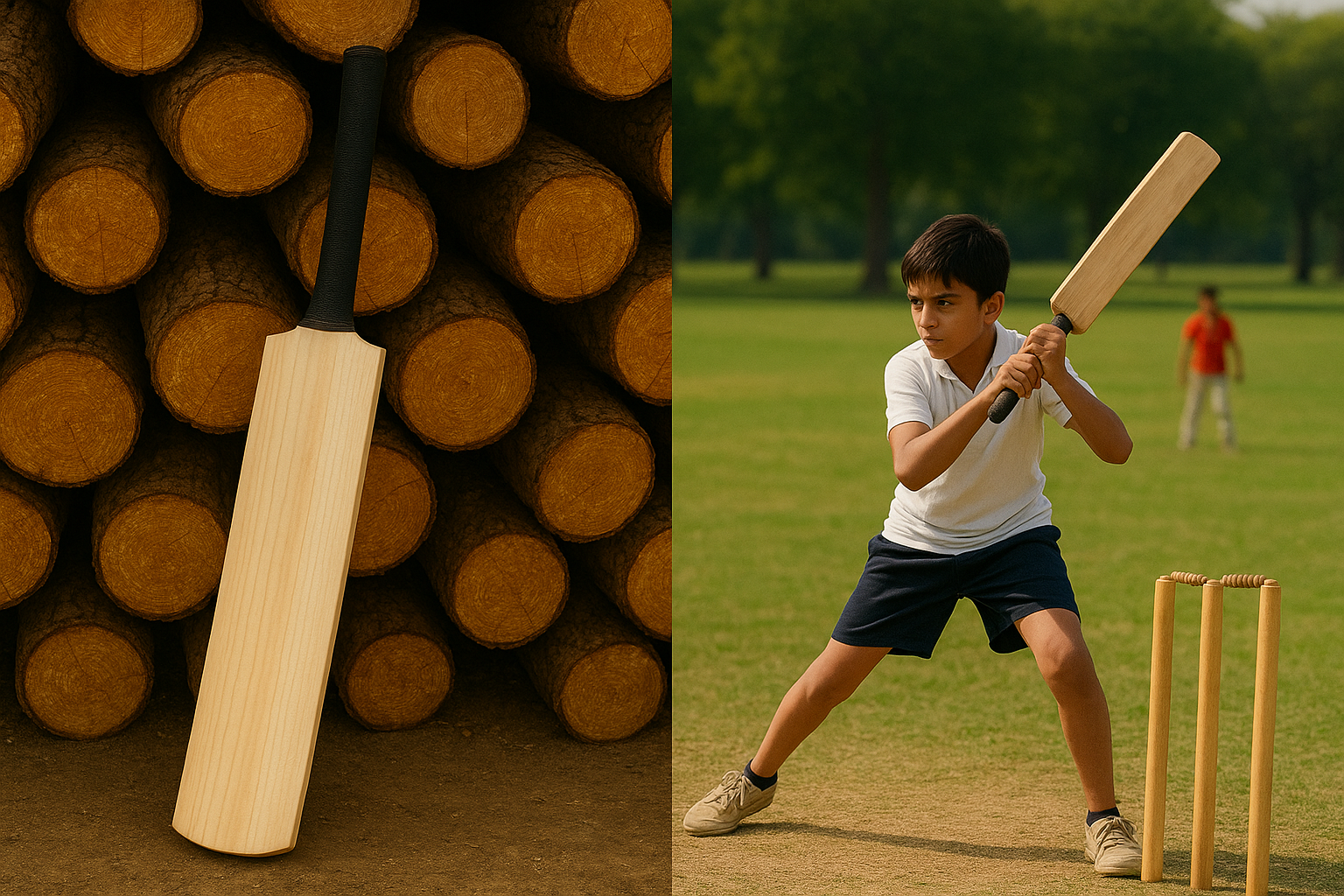
Kashmir Willow Bats: India’s Century-Old Craft that Powers World Cricket
Cricket is more than just a sport—it’s an emotion in India. What do you say? And behind every powerful shot lies a humble, handcrafted cricket bat. What many don’t know is that authentic cricket bats are made only in two places in the world— India and England.
And India’s entire production is rooted in the serene valleys of Kashmir.
From Himalayan willow trees to cricket stadiums worldwide, see how Kashmir artisans handcraft bats that carry India’s rich cricketing heritage. This is the story of how these bats are made, the special wood behind them, and why this craft needs preservation.
The Wood That Creates Champions
The only wood fit for professional cricket bats comes from the white willow tree (Salix alba var caerulea). Its perfect balance of lightweight structure, fine grains, and natural shock absorption makes it ideal for striking cricket balls with power and precision.
In India, Kashmir willow has earned global recognition. Grown naturally in the cool Himalayan climate, these willow trees develop strong, durable wood that rivals the famous English willow. This local resource makes Kashmir the heartbeat of Indian bat-making.
The Bat-Making Village of Kashmir
Along the Srinagar–Jammu National Highway, particularly in Sangam, Halamulla, and Bijbehara, lies the center of India’s bat-making heritage. Here:
- Over 400 small workshops handcraft bats
- The industry provides livelihoods to nearly 100,000 people
- 1–1.5 million bats are produced annually
This craft is over a century old, passed down through generations, keeping traditional techniques alive while adapting to modern cricket demands.
How a Cricket Bat Is Made
Bat-making in Kashmir is a labor of skill and patience, blending age-old expertise with careful material selection.
1. Selecting the Willow: Logs, called clefts, are cut from mature willow trees. Only wood with straight grains and minimal blemishes is chosen for quality bats.
2. Drying the Clefts: Clefts are air-dried naturally for 6 to 12 months, allowing the wood to reach the perfect moisture level. This prevents cracks and ensures the bat’s longevity.
3. Shaping the Blade: Artisans hand-carve the cleft into the familiar bat shape, carefully balancing weight and thickness for performance.
4. Fitting the Handle: Handles made from cane are inserted, bound with twine, and fitted with a rubber grip for comfort and flexibility.
5. Pressing and Finishing: Heavy mechanical presses harden the bat face, giving it resilience against fast-paced balls. Finally, each bat is sanded, polished, and branded, ready for matches worldwide.
Why Kashmir Willow Bats Are Special
- Affordable yet high-performing, making cricket accessible
- Known for durability and ability to withstand wet conditions
- Increasingly used by international cricketers, gaining global trust
While English willow remains popular in elite tournaments, Kashmir willow bats are proving their mettle, especially in limited-overs formats where power-hitting is crucial.
A Heritage Worth Protecting
Despite its long-standing legacy, the Kashmiri bat industry is facing significant challenges. A major concern is the shortage of willow trees, as many farmers are shifting to poplar plantations that grow faster and yield quicker returns but are unsuitable for bat-making. Additionally, environmental pressures, including urban expansion and inadequate replanting efforts, have drastically reduced the number of mature willow trees available each year, limiting the supply of clefts for production. Moreover, the industry struggles with a lack of modern branding, which prevents these high-quality Kashmiri bats from gaining the same global recognition and demand as English willow bats in international markets.
Efforts are actively being made to safeguard this traditional craft. Local universities and government bodies are encouraging replanting by distributing willow saplings, while manufacturers are adopting eco-friendly harvesting practices to ensure younger trees are not cut prematurely. International recognition is also growing, with more professional players endorsing Kashmir willow bats on prominent cricketing stages. Preserving this industry is not just about sustaining a craft—it’s about protecting livelihoods, cultural heritage, and an integral part of India’s cricketing identity.
From the lush willow groves of Kashmir to cricket fields across the globe, these bats carry a story of tradition, resilience, and unmatched craftsmanship.
As cricket continues to evolve, the artistry of Kashmiri bat-makers stands as a proud reminder that some crafts cannot be replicated by machines or mass production.
With the right support, Kashmir willow bats can shine brighter on the international stage, celebrating India’s unique contribution to the world of cricket.




Comments (2)
Vijayakumar S
Keep going madam
G. Devi
Its Quite an interesting message about Kashmir willow bats! Amazing to know the craftsmanship behind these bats. The making of these bats is really captivating 🏏