
The Hidden Gap in Our Diet: Why Protein Matters More Than We Think
For the longest time, “eating healthy” meant the same thing to me as it does to most people — eat less rice, cut down on sugar, avoid oily food. Simple, right? But even with all that effort, there were days when I felt unusually tired, weak, and low on energy. I brushed it aside as age, stress, or just the way life goes.
It wasn’t until I sat across from my doctor with a complaint of bone pain that the missing piece finally came to light. I expected the usual prescription — calcium tablets, Vitamin D, maybe some exercise. Instead, he said one word I wasn’t prepared for: Protein.
That single word turned my whole idea of “good diet” upside down.
why protein really matters
We often think of protein as something gym-goers and bodybuilders obsess over. But the truth is, protein is not optional. It’s the material our bodies are literally built on — muscles, bones, skin, hair, hormones, enzymes, and even our immunity depend on it.
Here’s the catch: our body can store fat and carbohydrates, but it cannot store protein. That means we need to supply it every single day. Otherwise, the body starts borrowing from its own reserves — breaking down muscles, weakening bones, and making us more prone to illnesses.
my own wake-up call
When my doctor told me to focus on protein, I was honestly surprised. Until then, I used to see youngsters like Niranjana and Devesh eating raw paneer or mixing protein powders in their shakes, and I would think, “Why all this? Isn’t regular food enough?”
But the day my own bones gave me a warning through osteoporosis, I had to change that opinion. It wasn’t about looking fit in the gym — it was about being strong enough to live well.
Not long after, I happened to listen to Dr. Sivaraman, the renowned Siddha doctor. I expected him to speak about millets and traditional grains. To my surprise, he too emphasized protein — even recommending paneer as part of the diet. That struck me deeply:
when modern medicine and traditional wisdom echo the same advice, maybe it’s time we stop ignoring it.
so, how much do we actually need?
Most adults require about 0.8–1 gram of protein per kilogram of body weight daily. If you’re more active, the requirement goes up to 1.2–2 grams. For someone weighing 60 kg, that’s anywhere between 50 and 120 grams of protein.
Now think about our usual plates: one idli has less than 2 grams, a full bowl of dal gives only 6–7 grams. Without careful planning, it’s very easy to fall short.
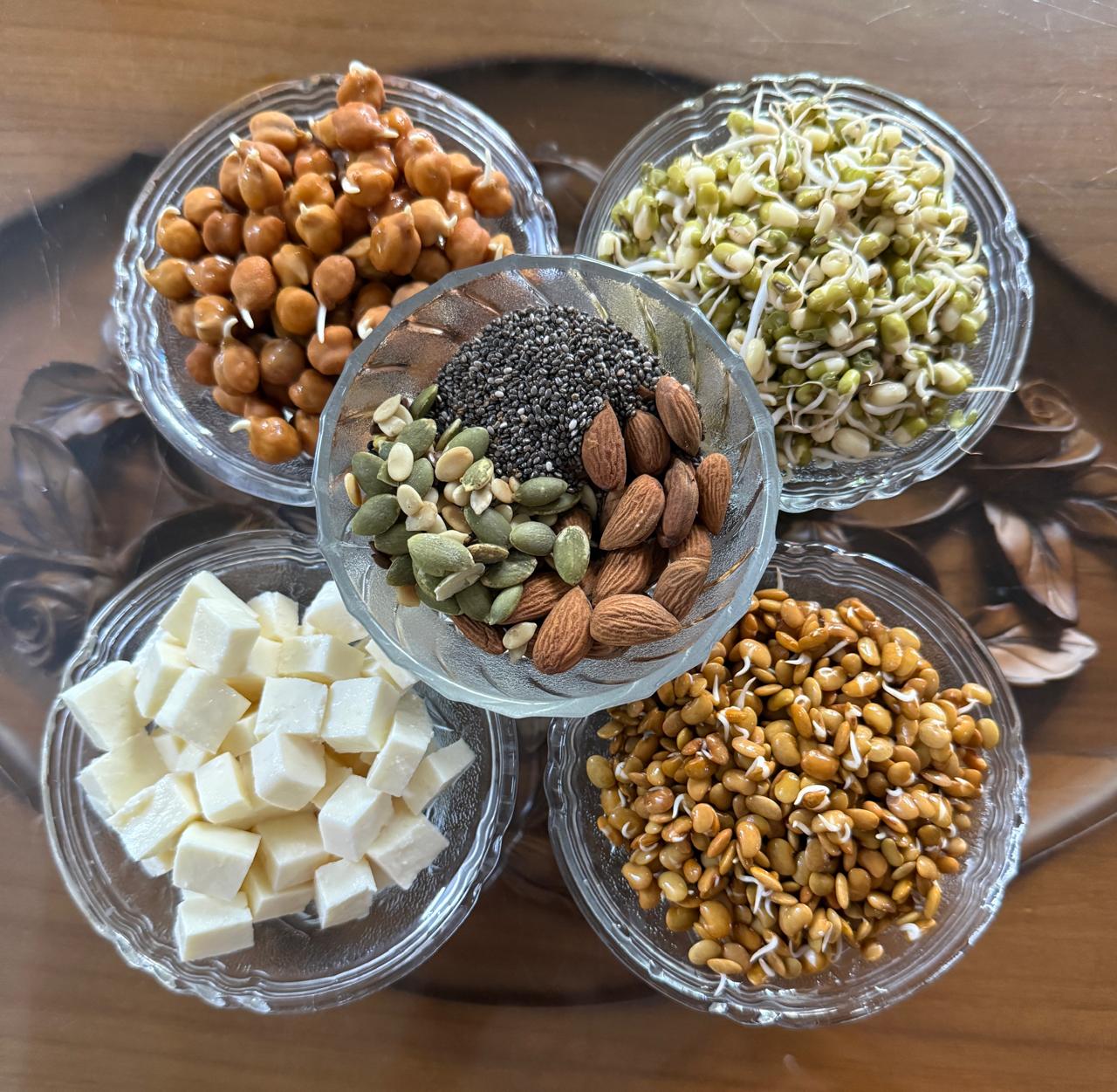
For non-vegetarians, protein is easier to source from eggs, chicken, or fish. But for vegetarians like me, it requires a little more thought. Luckily, we have plenty of options:
- Dals and legumes like moong, masoor, toor, rajma, horse gram, and chickpeas
- Dairy foods such as paneer, curd, milk, and Greek yogurt
- Soy and tofu for those open to plant-based alternatives
- Sprouts from moong or chickpeas
- Nuts and seeds — almonds, peanuts, chia, pumpkin seeds
And the best part? You don’t need to change your entire meal plan. Just small tweaks work: add sprouts with breakfast idlis, increase the portion of dal at lunch, swap evening biscuits for roasted chana or yogurt, and pair dinner chapathis with paneer curry, tofu stir-fry, or a bowl of dal.
a new way to think about diet
Being on a diet isn’t just about eating less or cutting out rice. A truly good diet is one that strengthens the body and keeps it going. For me, realizing the importance of protein was a turning point. It’s not a fitness fad — it’s the foundation of health.
So, the next time you proudly look at your plate of idli, rice, or chapathi with vegetables, pause for a moment and ask yourself:
👉 Where’s my protein?
💡 Remark: Don’t Forget the Carbs
While protein is vital, it doesn’t work in isolation. Our body needs carbohydrates too — not just for energy, but to actually make the best use of protein. Think of carbs as the spark that keeps the fire burning. Without enough of them, the body is forced to burn protein for fuel instead of using it for repair, strength, and immunity. That means even if you load up on paneer or protein powder but completely avoid rice, roti, or other carbs, you’re missing the balance.
Carbs help “spare” protein so it can do its real job — building and protecting your body. The key is not to fear carbs, but to choose the right ones: whole grains, dals, fruits, and vegetables, alongside your protein-rich foods.
When we think of carbohydrates, rice and wheat are the first foods that come to mind. For most Indian households, they’ve been the staples for generations. But carbs don’t end there — the food world is full of alternatives:
- Millets (ragi, bajra, jowar, foxtail, little millet) – complex carbs + fibre.
- Dals & legumes (toor dal, moong, rajma, chana) – carbs and protein in one.
- Fruits (banana, papaya, apple, mango) – natural sugars + fibre + vitamins.
- Vegetables (sweet potato, yam, tapioca, corn) – starchy and satisfying.
- Dairy (milk, curd) – adds lactose, a natural carb.
✨ The takeaway: carbs don’t have to mean only rice or wheat. With a little variety and planning, you can meet your body’s energy needs — while keeping the balance with protein.



One Comment
Swathikaa
👏Very well written.
So true, even I used to wonder why paneer is promoted so much recently and thought that it is just a marketing strategy.
While deeply analysing on my protein requirement, I was left deeply shocked that my healthy food habit is actually incomplete. Then we switched to sundal based adai dosas, paneer, sundal, milk and egg.
Additionally adai dosa became the most favourite after making it up like egg dosa.
Wondering how we were clueless on this topic these many years. Yes, now I watch my plate, and ask myself where’s my protein😊