
Where Love Meets Limits: Setting Healthy Boundaries with Children and Spouses
You’re standing at a family function, smiling out of courtesy, when a relative leans in and asks, “How much do you earn now?”
Or a friend shows up unannounced at your home, expecting to stay for dinner and your evening plans quietly fall apart.
Or even worse, a distant cousin at the market who casually asked, “Still no kids? How long will you both wait?”
None of it is dramatic. No one is yelling, hurting, or being cruel. But you feel something tighten inside, a quiet discomfort. A sense that a line was crossed. You can feel the unseen weight of uninvited closeness, right?
From family to friends to professionals — boundaries(personal space and the degree of separation that individuals maintain between each other in social situations) only protect your peace, not your pride.
In our culture, closeness is often celebrated. We are taught that love means being involved, available, and emotionally open with family, friends, and even neighbors. We share food, advice, opinions, even unasked-for life plans. But somewhere along the way, the line between love and interference gets blurred. And without realizing it, we let people come closer than they need to, even emotionally and mentally too.
This blog is a gentle reminder that distance is not disrespect, actually it’s self-respect.
When we learn to draw the line — with warmth, not walls — we don’t push people away. We simply protect our space, and allow relationships to grow with mutual clarity and comfort.
I. With Family – Love Too Needs Space!
Family is our closest bond and sometimes our hardest boundary. From childhood, we’re told that “everything must be shared.” But as we grow, we need emotional privacy and personal choice. Isn’t it?
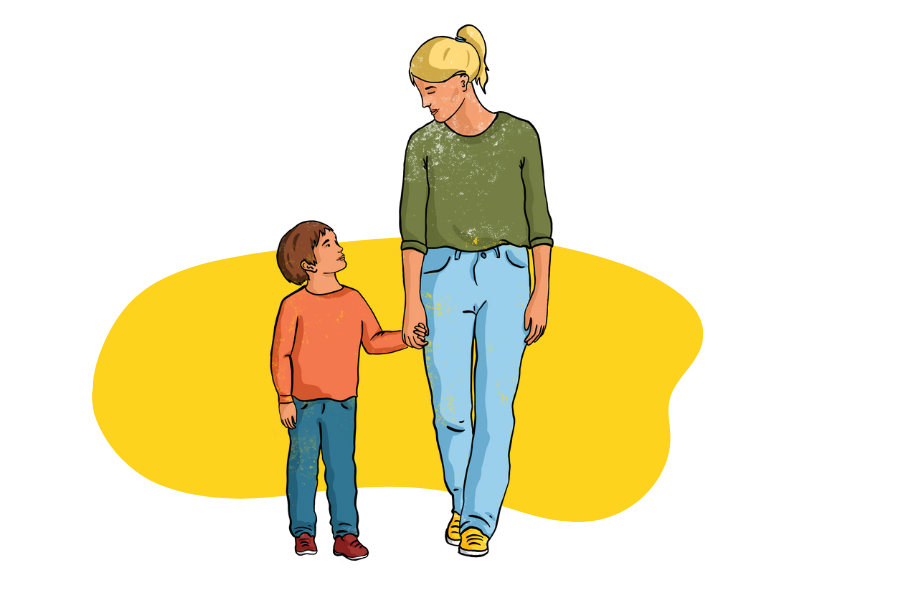
a. Parents and Children – When ‘I Know Best’ Goes Too Far
One of the most common phrases heard in Indian homes is: “I only want what’s best for you.” And very often, it’s said while deciding on behalf of the child — be it choosing their career path, field of study, or life partner.
The intention is love, protection, and providing a good life. But the effect can often be suffocation, frustration, or silent compliance. Right?
A parent’s experience is valuable — but a child’s inner voice is equally valid.
- Choosing your son’s course because “it has scope” may ignore what he truly loves.
- Saying yes to a marriage proposal for your daughter because “the family is good” might ignore what she truly feels.
- Constantly repeating, “We sacrificed everything for you,” may sound like emotional blackmail — not guidance.
You gave them roots. Now give them wings, even if they fly a different route.
Children need room to disagree, explore, fail, and find their own rhythm. But, decisions around higher education, career paths, and especially marriage often become battlegrounds where “respect” is confused with “obedience”. In many families,
- A daughter who says “no” to an arranged proposal is seen as ungrateful.
- A son who chooses an offbeat career is called irresponsible.
- And when adult children speak their mind, they hear, “We’ve done everything for you and how can you go against us?”
The truth is, love doesn’t need agreement, it needs understanding, what do you say?
Particularly, between Mother and Daughter – From Nurture to Letting Go: A mother may feel entitled to her daughter’s thoughts, but growth requires emotional independence. You held her hand when she was small. Now hold her heart without holding her back. Sounds great!
When we give our grown-up children the space to think and make their own choices, we help them build confidence in their voice and their journey. Let parents not make decisions that leave the child unheard, starting from getting a toy, to a dress, to marriage! Let them choose. Let them fall. Let them be themselves. Love Can Guide, Not Decide!
A better approach might sound like: “This is what I think is good for you. But I trust you to decide.” (Share your wisdom, but allow freedom)
or “I may not understand your path fully, but I’ll walk beside you if it’s right for you.” (Be a guide, not a guard)
or “If it turns out to be a mistake, I’ll still be your home to return to.”(Stand beside them, not over them)
“Being a good parent doesn’t mean making every decision. It means preparing your child to make their own, and being there, no matter the outcome.”
That respectful distance creates trust. It tells the child: “You can always return to me — not because you were forced to stay, but because you chose to come back.!
b. Life Partners – Boundaries That Build Togetherness
Respectful distance between life partners is as essential as it is with children—perhaps even more so, because it sets the tone for the entire family. What do you say?
A healthy boundary between husband and wife means knowing when to step in and when to step back. It’s about respecting each other’s roles, choices, and personal space without overstepping or becoming overbearing.
This includes
- allowing your partner to manage their responsibilities in their own way,
- discussing differences calmly,
- supporting without micromanaging, and
- keeping certain matters private between the two of you.
Giving room for personal time, trusting each other’s judgment, and avoiding unnecessary interference in every small decision builds mutual respect and keeps the relationship warm without becoming stifling.
Note: Respectful distance with family means:
- Letting adult children / partner live their choices
- Not forcing advice or expectations
- Creating space to pause and reflect — even in love
If we keep respectful distance, it strengthens the bond, because it is based on trust, not control. And it reduces long-term resentment, which often arises when people feel unheard or overruled.
Let me share some insights on the same, keeping respectful distance with friends, Colleagues and officials and physical proximity in my next blog!



One Comment
Pramod Kumar Yadav
Very nice and fruitful blog