

Why You Can’t Die in Longyearbyen: Fascinating Facts About the Arctic Town of Svalbard
Do you wish to plan a vacation in a snowy Arctic town? Great. Here’s Longyearbyen, the world’s northernmost town in Norway.
‘People can not die here’ – hearing this what comes to your mind? Oh, let me go there so that I can live forever? It’s not that people are immortal here — it’s just that death has to happen elsewhere. This town has a strange and fascinating rule: dying is technically illegal there. This sounds dramatic, right? It’s not because the town punishes death — it’s about protecting the living and the environment in an extreme Arctic climate. Confusing?
Here’s the reason behind this unique law: As Longyearbyen sits on permafrost, meaning the ground is permanently frozen, when someone is buried, their body doesn’t decompose.
Back in 1918, some folks died of the Spanish Flu and were buried in Longyearbyen. Fast forward a few decades, scientists digging around found that the virus was still chilling (literally) in their corpses. Potentially dangerous posing a haunting possibility: what if ancient diseases could thaw and reawaken?
So the town said, “You know what? Let’s not bury anyone else here. Ever.”
The lack of decomposition poses risks of spreading diseases, especially if ancient pathogens survive and it also creates challenges for maintaining hygienic burial conditions and ecosystem safety.
Now, you may get a question, What happens if someone is terminally ill or near death?
People who are seriously ill or elderly are transferred to the mainland of Norway for care and, ultimately, to pass away. You will be wondering if you know that there is no hospital equipped for critical or end-of-life care in Longyearbyen.
Though burials are not allowed, cremation is recommended on condition that any ashes or remains that do make it back are kept above ground or transferred elsewhere.
Where Is This Place, Anyway? Aren’t you curious to know? Longyearbyen sits on the Svalbard archipelago, way up in the Arctic Circle, where reindeer casually wander the streets, and the sun vanishes for months in winter. It’s got about 2,500 people, more polar bears than humans.
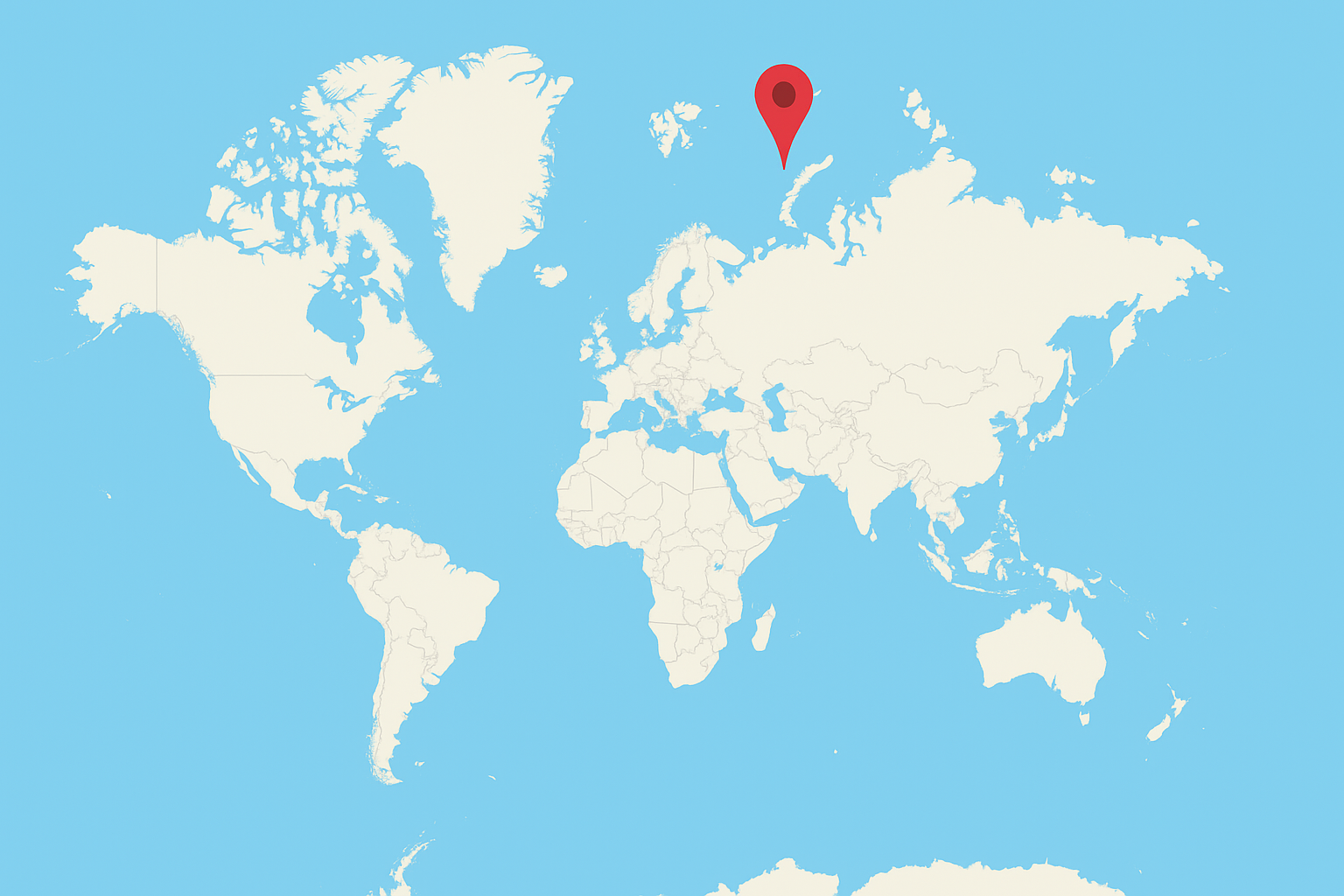
Living in Longyearbyen is like living in a National Geographic episode. Some charming quirks include:
- As I said in the beginning, you can’t just move here to “disconnect” or “find peace”. You need a job and housing first. No job = no stay.
- No cats allowed. They’re banned to protect the native bird population.
- And, You must carry a rifle when venturing out of town (yes, really) — polar bears aren’t as cuddly as the Coca-Cola ads suggest.
In a world that rarely slows down to consider how nature and humanity collide, this quirky town forces us to think about how even dying must follow local laws
And another interesting thing you might live to know is, there lies ‘The Svalbard Global Seed Vault’ — a giant freezer holding millions of seeds to safeguard the future of global food, nearby. Basically, if Earth ever hits reset, it’ll start here. (The Svalbard Global Seed Vault was established and is owned by Norway. It is operated in a unique partnership between the Norwegian Ministry of Food and Agriculture, the regional genebank NordGen and the Crop Trust, an independent international organisation.)
You can live in Longyearbyen. You can work, marry, hike with a rifle, and even wrestle with existential dread even at 2 o’clock in the polar night. But when death knocks—you’ll need to catch the next flight.



One Comment
Pramod Kumar Yadav
Wow!!!!Wonderful research of this Lovely place ,we must visit this place