
Perfectionism: The Silent Barrier to Productivity and Peace of Mind
You know, perfectionism is not as perfect as it sounds! Are you surprised? Or maybe you’re thinking, “She must be mistaken,” or even, “Is something wrong with her?”
I get it. I used to believe the same — that aiming for perfection was a strength, a sign of high standards and discipline. But over time, I’ve started to notice how this constant need to get everything “just right” hasn’t always helped me. In fact, it’s often made things harder — whether it’s starting something new, enjoying the process, or simply letting go.
We often hear people say, “I’m a perfectionist,” as if it’s something to be proud of, almost like a badge of honour. It sounds admirable — like someone with strong values who pays attention to every detail and wants things done the right way.
But let’s pause for a moment and ask: Is perfectionism really a strength? Or is it a quiet burden in disguise? Can you see there is a hidden cost of perfectionism!
Yes, perfectionism isn’t the same as striving for excellence. Wanting to do your best is healthy. It pushes you to grow, learn, and improve.
But perfectionism comes from a place of fear — not inspiration. Fear of failure. Fear of being judged. Fear of not being good enough.
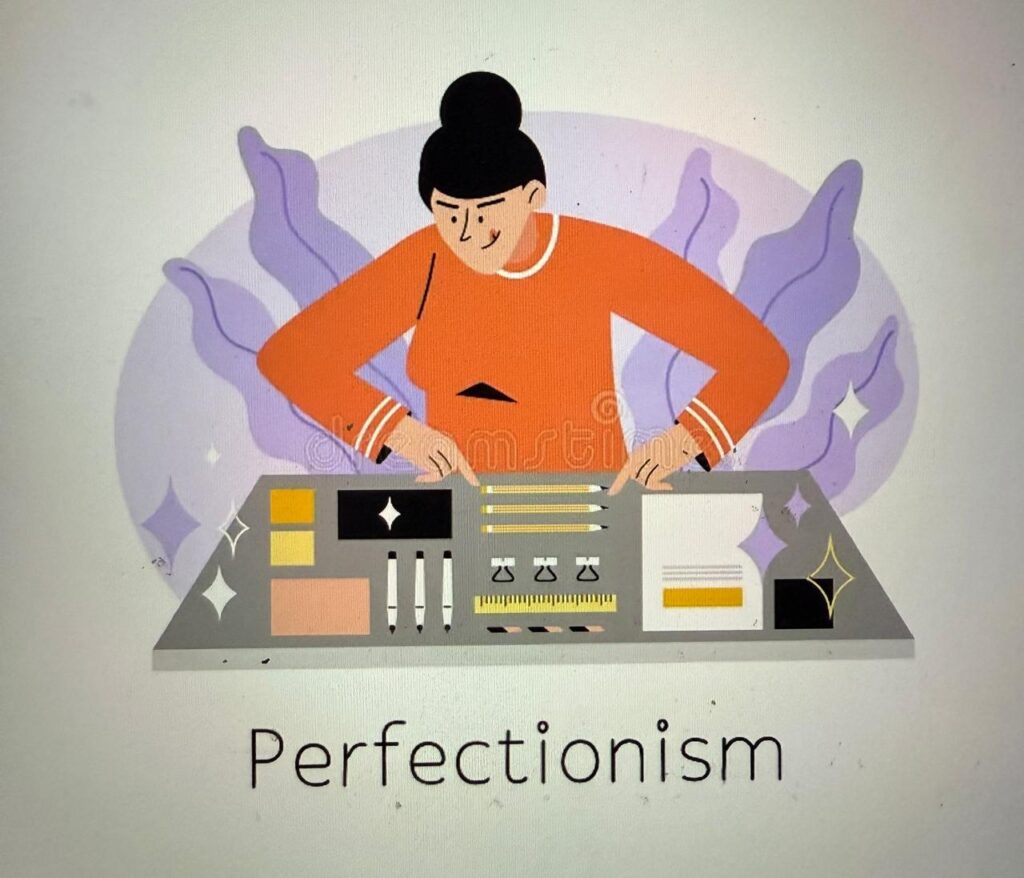
And fear has a cost:
- You hesitate to start something unless you’re sure it will be perfect.
- You delay finishing a project, endlessly tweaking it.
- You feel frustrated, anxious, or even worthless when things don’t go as planned.
What begins as “high standards” ends in burnout, procrastination, or never starting at all.
My Personal Struggle with Perfectionism
I’ve come to realise that my perfectionism didn’t just affect my work — it seeped into the smallest corners of my life.
During my childhood, I avoided games like Ludo or Snakes and Ladders, not because I didn’t enjoy them, but because I feared losing. I remember moments when, if I saw myself about to lose, I’d find a reason to stop the game altogether — sometimes even spoiling it for others. It wasn’t about the game; it was about how I couldn’t bear to not be the best at it.
Even now, I hesitate to play cards with family or friends. I give excuses, but the truth is — I still carry that old fear. Sometimes I tell myself, “Come on, it’s just a game, join in.” And I do. But deep inside, there’s an expectation that I must win… or I feel restless and defeated.

That same mindset followed me into my creative life.
I started creating YouTube videos — something I was passionate about. But soon, it became a mental struggle. I would record a video… then re-record… and re-record again — all because I felt one pronunciation wasn’t right, or my tone wasn’t perfect, or a sentence didn’t flow the way I wanted. What began with enthusiasm slowly turned into frustration. Eventually, I stopped altogether — not because I didn’t enjoy it, but because I couldn’t allow myself to post anything that wasn’t perfect.
Perfectionism had disguised itself as “standards,” but what it really gave me was exhaustion and self-doubt.
Perfectionism: A Quiet Form of Self-Sabotage
At first glance, perfectionism looks like a strength — who wouldn’t want to get everything just right? But in reality, it’s one of the most subtle forms of self-sabotage, meaning self defeating or hindering.
When you’re constantly waiting for the perfect version, you delay action. You second-guess yourself. You redo and re-record. You hide your work, afraid it’s not good enough. Over time, you stop putting yourself out there altogether — not because you’re lazy or incapable, but because you’ve made perfection the price of participation.
And that’s how perfectionism becomes the wall you build between yourself and your own potential.
Signs Your Perfectionism Is Becoming Self-Sabotage:
- You delay starting things because you “don’t feel ready yet.”
- You keep editing, reworking, or redoing tasks — and never feel satisfied.
- You avoid sharing your work or ideas out of fear of judgment or criticism.
- You procrastinate on important tasks — not because you’re lazy, but because you’re afraid to fail.
- You walk away from things you care about (projects, hobbies, even games) if they don’t go perfectly.
- You often think, “If I can’t do it perfectly, I’d rather not do it at all.”
Learning to Show Up — Imperfect, but Whole
I’m still learning to let go of that tight grip perfectionism has had on me — in games, in creativity, and in life. It’s not easy. That voice still whispers, “Do better. Be flawless.” But now, I pause and ask myself, “Is it really about being perfect? Or just about showing up as I am?”
Slowly, I’m learning to give myself permission to show up imperfectly — to create, to share, to laugh, to lose, and to just be without needing everything to be “just right.”
And in that space, I’ve found something far more meaningful than perfection: peace, freedom, and authenticity.
Perfectionism once felt like control. But now, I see it was a quiet form of self-sabotage — keeping me from joy, creativity, and connection.
Letting go of perfection isn’t easy. But every time we choose progress over perfection, we grow. We live. We become whole. Maybe, just maybe, that’s where the real magic is.